Read, Play, and Win Big
Make sure to read the full article below to get all the details on this challenge. We’ve put together a massive prize pool featuring the newest iPhones, gaming PCs, gift cards, consoles, and premium headsets. Your knowledge is your ticket to win!
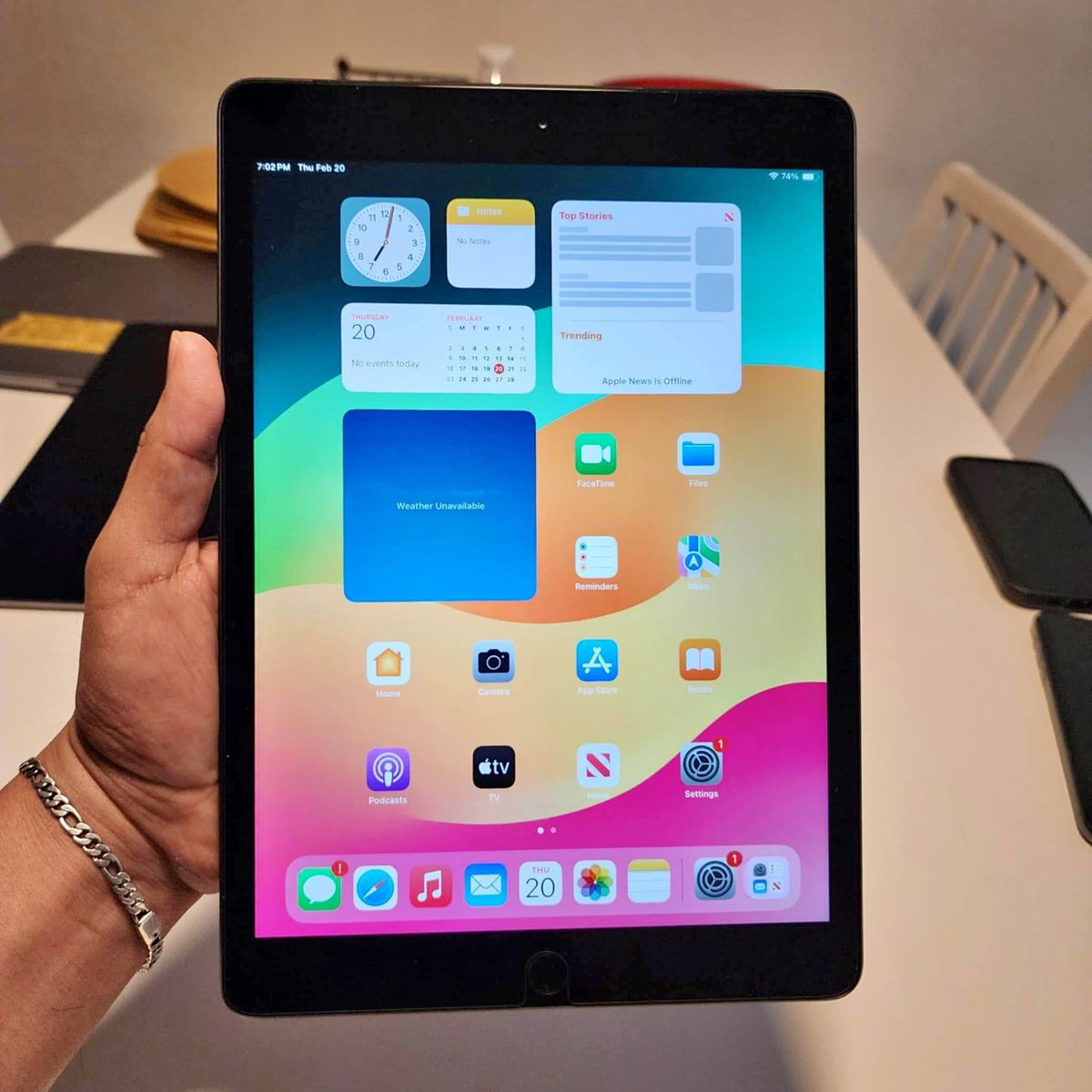
The new iPad 2025 is the most significant tablet release Apple has delivered in years. Powered by the Apple M4 chip, wrapped in the thinnest aluminum chassis Apple has ever engineered, and running the AI-enhanced iPadOS 19, this device blurs the line between a premium tablet and a full-fledged laptop in ways that previous iPads only hinted at. Whether you are a digital artist, a student, a content creator, a business professional, or a casual user who wants the best tablet money can buy, the 2025 iPad lineup demands serious attention.
In this comprehensive review, we examine every aspect of the new iPad 2025 — from the M4 processor’s benchmark-crushing performance to the redesigned Apple Pencil Pro, the upgraded Magic Keyboard, and the question that matters most: is the iPad finally a true laptop replacement? We provide real specifications, honest performance assessments, and a detailed comparison table to help you decide which 2025 iPad model is right for your needs.
The Evolution of the iPad: From 2010 to 2025
The Original Vision: A Device Between Phone and Laptop
When Steve Jobs introduced the original iPad in January 2010, many questioned whether there was a market for a device that sat between the iPhone and the MacBook. The answer, as we now know, was a resounding yes. The iPad created an entirely new product category — the modern tablet — and has sold over 500 million units across all generations since launch.
The early iPads were consumption devices: great for browsing the web, reading books, and watching video, but limited in their ability to create professional content. The introduction of the iPad Pro line in 2015, followed by the Apple Pencil and Smart Keyboard, began the transformation from consumption device to creation tool.
The Apple Silicon Revolution
The most transformative moment in iPad history came with the transition to Apple Silicon. The M1 iPad Pro (2021) was the first tablet to use the same chip architecture as Apple’s Mac computers, delivering desktop-class performance in a tablet form factor. The M2 followed in 2022, and the M4 arrived in 2024 — each generation bringing meaningful improvements in CPU performance, GPU capability, neural engine throughput, and power efficiency.
By 2025, the M4-powered iPad is no longer aspirationally compared to laptops — it genuinely competes with them on performance benchmarks. The remaining gap is not hardware capability but software: iPadOS still imposes certain workflow limitations that macOS does not. Apple’s incremental progress on this front with iPadOS 19 suggests they are methodically closing that gap.
Apple M4 Chip: Performance That Rivals Laptops
Architecture and Core Configuration
The Apple M4 chip in the 2025 iPad uses a second-generation 3-nanometer manufacturing process from TSMC, packing approximately 28 billion transistors into a die roughly the size of a postage stamp. The chip features a 10-core CPU (4 performance cores + 6 efficiency cores), a 10-core GPU, and a 16-core Neural Engine capable of 38 trillion operations per second (TOPS).
In practical terms, this means the M4 iPad can handle tasks that would have required a dedicated laptop or desktop just a few years ago. Video editors can scrub through 4K ProRes timelines without dropped frames. Musicians can load dozens of virtual instruments in Logic Pro for iPad simultaneously. Developers can compile code and run simulations with speeds that rival mid-range MacBook Pro configurations.
Benchmark Performance
The M4 delivers benchmark scores that place it firmly in laptop territory:
- Geekbench 6 Single-Core: Approximately 3,800 — faster than any Intel or AMD laptop processor at comparable power consumption
- Geekbench 6 Multi-Core: Approximately 14,600 — competitive with the M3 Pro chip found in 14-inch MacBook Pro
- GPU (Metal): Approximately 53,000 — enabling console-quality gaming and professional 3D rendering
- Neural Engine: 38 TOPS — powering real-time AI features including image generation, live translation, and intelligent writing assistance
Power Efficiency: Performance Without Compromise
Perhaps the most impressive aspect of the M4 is not its raw speed but the efficiency at which it achieves that speed. The 3nm process allows the chip to deliver M3 Pro-level performance while consuming significantly less power. This translates directly to battery life — the 2025 iPad achieves up to 10 hours of mixed-use battery life despite being thinner and lighter than its predecessors.
Apple’s unified memory architecture (with options for 8GB or 16GB of RAM depending on the model) eliminates the traditional bottleneck between CPU and GPU memory access, allowing both processors to work with the same pool of high-bandwidth memory without copying data back and forth. This architectural advantage is a key reason why Apple Silicon outperforms competitors that have higher raw clock speeds but less efficient memory systems.
Display and Design: Liquid Retina XDR and the Thinnest iPad Yet
The Tandem OLED Display
The 2025 iPad Pro models feature Apple’s Ultra Retina XDR display using tandem OLED technology — two OLED panels stacked on top of each other to deliver unprecedented brightness and color accuracy for a mobile device. This dual-layer approach achieves 1,000 nits of full-screen sustained brightness and 1,600 nits of peak HDR brightness, making it usable in direct sunlight and spectacular for HDR video content.
The display supports the full DCI-P3 color gamut with a contrast ratio of 2,000,000:1 — an effectively infinite contrast ratio where true blacks are actually black, not dark gray. For photographers, video editors, and designers working with color-critical content, this level of display accuracy means they can trust what they see on the iPad screen to accurately represent how their work will look in its final form.
ProMotion with Variable Refresh Rate
The ProMotion adaptive refresh rate system dynamically adjusts the display’s refresh rate between 10Hz and 120Hz based on the content being displayed. When reading a static document, the display drops to 10Hz to conserve power. When scrolling through a web page, drawing with Apple Pencil, or playing a game, it ramps up to a buttery-smooth 120Hz. This adaptive system contributes significantly to the iPad’s battery efficiency without any compromise in responsiveness.
Industrial Design: 5.1mm Thin
The 2025 iPad Pro is Apple’s thinnest product ever at just 5.1mm — thinner than the original iPod nano. Despite this extreme thinness, Apple has maintained structural rigidity through the use of a titanium-enhanced aluminum alloy and internal reinforcement structures. The concern about bending (which plagued the 2018 iPad Pro) has been thoroughly addressed through engineering improvements in chassis design.
The device weighs approximately 444 grams for the 11-inch model and 579 grams for the 13-inch model — light enough to hold with one hand for extended reading sessions and portable enough to take everywhere without thinking twice about it.
iPadOS 19 and Apple Intelligence: AI on Your Tablet
Apple Intelligence Features
Apple Intelligence — Apple’s on-device AI system — is deeply integrated into iPadOS 19 on M4-powered iPads. Unlike cloud-dependent AI assistants that send your data to remote servers, Apple Intelligence processes most tasks directly on the device using the M4’s 16-core Neural Engine. This approach provides faster response times and stronger privacy protection.
Key Apple Intelligence features available on the 2025 iPad include:
- Writing Tools: Systemwide AI-powered writing assistance that can proofread, rewrite, summarize, and adjust the tone of any text in any app
- Image Playground: Generate stylized images from text descriptions or existing photos — directly on-device without an internet connection
- Genmoji: Create custom emoji based on text descriptions or photos of people, automatically matching Apple’s emoji art style
- Smart Siri: A significantly more capable Siri that can understand context across apps, execute multi-step requests, and maintain conversational context
- Notification Summaries: AI-generated summaries of notification groups that help you quickly assess which alerts require attention
- Visual Intelligence: Point the camera at an object, restaurant, or landmark and get instant AI-powered information about what you see
Privacy-First AI Processing
Apple’s approach to AI fundamentally differs from competitors in its emphasis on privacy. The M4 Neural Engine handles most AI tasks locally, meaning your writing drafts, personal photos, and voice commands never leave your device. For tasks that require more computational power than the device can provide, Apple uses a system called Private Cloud Compute, which processes requests on Apple Silicon servers with cryptographic verification that no data is stored or accessible after processing is complete.
Apple Pencil Pro: Precision for Creatives and Professionals
New Sensors and Capabilities
The Apple Pencil Pro is the most advanced stylus Apple has ever produced. It introduces several new capabilities that significantly enhance the creative workflow:
- Squeeze gesture: A pressure sensor in the barrel detects when you squeeze the pencil, which triggers a customizable radial menu for quick tool switching — no need to reach for the toolbar
- Barrel Roll: A gyroscope sensor detects the rotation angle of the pencil, allowing shaped brushes and calligraphy pens to respond naturally to how you rotate the tool in your hand
- Haptic feedback: A tiny haptic engine inside the pencil provides subtle vibrations when you squeeze, switch tools, or snap to alignment guides, giving physical confirmation of digital actions
- Find My integration: The Apple Pencil Pro appears in the Find My app, so you can locate it if it rolls behind your desk or gets left in a bag
Latency and Drawing Experience
Apple reports latency as low as 2 milliseconds when drawing with Apple Pencil Pro on the 2025 iPad Pro — making it feel virtually indistinguishable from putting ink on paper. Professional illustrators, architects, and note-takers consistently report that the combination of the ProMotion display’s 120Hz refresh rate and the Pencil Pro’s minimal latency creates the most natural and responsive digital drawing experience available on any tablet platform.
Magic Keyboard 2: Turning the iPad Into a Laptop Replacement
Design Improvements
The Magic Keyboard for iPad (2025) has been significantly redesigned. The new version features a full row of function keys (including brightness, volume, and a dedicated key for activating Siri), a larger trackpad with haptic feedback, and an aluminum palm rest that provides a more premium, laptop-like feel.
The hinge mechanism has been improved to provide smoother angle adjustments and more stable support in lap-use scenarios. When attached, the iPad floats above the keyboard at an adjustable angle, creating a laptop-like form factor with an appearance that would not look out of place in a corporate boardroom.
Typing Experience
The scissor-mechanism keys provide 1mm of key travel — sufficient for comfortable extended typing sessions. Key spacing and sizing mirror Apple’s full-size keyboards, and the backlit keys automatically adjust brightness based on ambient lighting conditions. A USB-C port on the hinge allows pass-through charging, keeping the iPad’s USB-C port available for accessories.
The Laptop Replacement Question
With the Magic Keyboard attached, the iPad Pro genuinely functions as a laptop for many workflows: writing, email, web browsing, spreadsheet work, presentations, photo editing, and video calls can all be performed comfortably and efficiently. The remaining limitations are software-based rather than hardware-based: iPadOS does not support resizable overlapping windows (though Stage Manager provides multi-window capability), some professional desktop applications do not have iPad equivalents, and file management remains more restrictive than macOS or Windows.
For users whose workflows center on writing, media consumption, light creative work, and communication, the iPad with Magic Keyboard is a compelling and lighter alternative to a MacBook Air. For users who need complex multi-application workflows, command-line tools, or specific desktop software, a laptop remains the better choice.
Gaming on the iPad 2025: Console-Quality Performance
Metal 3 Graphics and AAA Titles
The M4 GPU’s 10 cores and hardware-accelerated ray tracing support enable the iPad to run console-quality games that were previously exclusive to dedicated gaming hardware. Apple’s Metal 3 graphics API provides developers with low-level access to the GPU, allowing them to optimize performance in ways that were not possible with previous APIs.
Games currently available on the iPad 2025 at console-level quality include:
- Resident Evil Village — Full console port with ray tracing enabled
- Death Stranding: Director’s Cut — Complete Kojima Productions experience on a tablet
- Assassin’s Creed Mirage — Full open-world gameplay at 60fps
- Genshin Impact — Maximum graphics settings with stable frame rates
- Call of Duty: Warzone Mobile — 120fps gameplay on the ProMotion display
Controller Support and Accessories
The iPad 2025 supports PlayStation DualSense, Xbox Wireless Controller, and any MFi-certified Bluetooth gamepad. The DualSense controller’s adaptive triggers and haptic feedback are fully supported in compatible iPad games, providing the same tactile gaming experience as playing on a PlayStation 5.
For an enhanced gaming setup, you can connect the iPad to an external display via USB-C and use it as a portable gaming console connected to a television — combining the portability of a tablet with the big-screen experience of a home console.
Camera System and Video Capabilities
Rear Camera
The 2025 iPad Pro features a 12MP wide camera with an f/1.8 aperture, capable of capturing 4K video at 60fps with ProRes support. An adaptive True Tone flash provides even illumination for document scanning. While the iPad camera is not as advanced as the iPhone’s multi-lens system, it is more than adequate for document scanning, video calls, AR applications, and casual photography.
Front Camera Repositioned
Apple has finally moved the front-facing camera to the landscape edge of the iPad — the orientation in which most users hold the device during video calls. This repositioning means you are now centered in the frame during FaceTime and Zoom calls when the iPad is in its natural keyboard-attached position, eliminating the awkward off-center eye contact issue that plagued previous iPad generations.
The 12MP TrueDepth camera supports Center Stage, which automatically pans and zooms to keep you in the frame as you move around, and supports Face ID for secure biometric authentication.
Battery Life, Charging, and Connectivity
Battery Life
Apple rates the 2025 iPad Pro at up to 10 hours of web browsing or video playback on Wi-Fi. In real-world mixed use — combining writing, web browsing, email, some photo editing, and occasional gaming — most users report getting between 7 and 9 hours of active use. Heavy sustained workloads like 4K video export or extended gaming sessions can drain the battery more quickly, bringing runtime down to 4 to 5 hours.
Charging
The iPad charges via USB-C and supports up to 30W fast charging with a compatible adapter (sold separately — Apple includes only a USB-C cable in the box). A full charge from empty takes approximately 90 minutes with a 30W adapter, or about 2 hours with the included cable and a standard 20W adapter.
Connectivity Options
- Wi-Fi 6E with support for 2.4GHz, 5GHz, and 6GHz bands
- Bluetooth 5.3 for stable connections to keyboards, mice, headphones, and controllers
- 5G cellular (on cellular models) with eSIM support and no physical SIM tray
- USB-C with Thunderbolt 4 / USB 4 supporting data transfer speeds up to 40Gbps, external display output up to 6K, and connection to professional peripherals like RAID storage arrays, audio interfaces, and Ethernet adapters
iPad 2025 vs iPad Air vs iPad Pro: Which One Should You Buy?
| Feature | iPad (11th Gen, 2025) | iPad Air (M3, 2025) | iPad Pro (M4, 2025) |
|---|---|---|---|
| Chip | A16 Bionic | Apple M3 | Apple M4 |
| Display | 10.9″ Liquid Retina (60Hz) | 11″ / 13″ Liquid Retina (60Hz) | 11″ / 13″ Ultra Retina XDR OLED (120Hz) |
| RAM | 4GB | 8GB | 8GB / 16GB |
| Storage Options | 64GB / 256GB | 128GB / 256GB / 512GB / 1TB | 256GB / 512GB / 1TB / 2TB |
| Apple Pencil | Apple Pencil (USB-C) | Apple Pencil Pro | Apple Pencil Pro |
| ProMotion (120Hz) | No | No | Yes |
| Face ID | No (Touch ID) | No (Touch ID) | Yes |
| Thunderbolt / USB 4 | No (USB-C 3.0) | No (USB-C 3.1) | Yes (Thunderbolt 4) |
| Starting Price | $349 | $599 | $1,099 |
| Best For | Students, casual users, first iPad | Creatives, students, professionals on a budget | Pro creatives, developers, power users |
Who Should Buy the New iPad 2025?
Digital Artists and Designers
If you use Procreate, Adobe Photoshop, Illustrator, or Affinity Designer, the iPad Pro with Apple Pencil Pro offers the best digital drawing and design experience available on any tablet. The combination of the OLED display’s color accuracy, the Pencil Pro’s barrel roll and squeeze gestures, and the M4’s processing power creates a professional-grade creative studio that weighs less than a pound.
Students
For note-taking, research, textbook reading, and assignments, the base iPad or iPad Air offers excellent value. The Apple Pencil transforms lecture capture, and the lightweight form factor makes it easy to carry between classes all day.
Content Creators
Video editors, podcasters, and photographers benefit enormously from the M4’s processing power. Final Cut Pro and Logic Pro for iPad are remarkably capable, and the Thunderbolt connectivity allows direct import from professional cameras and audio interfaces.
Business Professionals
For presentations, email, document review, and video conferencing, the iPad with Magic Keyboard provides a lighter, more portable alternative to a laptop. The repositioned front camera makes video calls significantly more natural.
Frequently Asked Questions (FAQ)
What chip does the new iPad 2025 use?
The iPad Pro 2025 uses the Apple M4 chip, featuring a 10-core CPU, 10-core GPU, and 16-core Neural Engine with 38 TOPS of AI processing power. The base iPad uses the A16 Bionic, and the iPad Air uses the M3 chip. The M4 is Apple’s most powerful and efficient mobile processor, built on TSMC’s second-generation 3nm process.
Can the iPad 2025 replace a laptop?
For many users, yes. With the Magic Keyboard attached, the iPad Pro handles writing, email, web browsing, presentations, photo editing, and video calls with ease. However, users who need complex multi-window workflows, desktop-only applications, or command-line tools will find that iPadOS still imposes some limitations compared to macOS or Windows. The answer depends on your specific workflow requirements.
Is the iPad 2025 good for gaming?
The iPad 2025 is excellent for gaming. The M4 chip’s GPU and Metal 3 graphics API enable console-quality titles like Resident Evil Village, Death Stranding, and Assassin’s Creed Mirage to run at high frame rates with ray tracing support. The 120Hz ProMotion display ensures smooth visuals, and full support for PlayStation DualSense and Xbox controllers makes it a serious portable gaming device.
How much does the new iPad 2025 cost?
The base iPad (11th generation) starts at $349, the iPad Air starts at $599, and the iPad Pro starts at $1,099 for the 11-inch model and $1,299 for the 13-inch model. Prices increase with higher storage configurations and cellular connectivity. The Apple Pencil Pro ($129) and Magic Keyboard ($299-$349) are sold separately.
Does the new iPad support Apple Intelligence AI features?
Apple Intelligence is available on iPads with M1 chips or later. The M4-powered iPad Pro and M3-powered iPad Air support the full suite of Apple Intelligence features, including writing tools, image generation, smart Siri, and visual intelligence. The base iPad with A16 Bionic supports a subset of Apple Intelligence features with some limitations.
What is the difference between the iPad Pro and iPad Air in 2025?
The key differences are the display technology (OLED vs LCD), the chip (M4 vs M3), ProMotion 120Hz refresh rate (Pro only), Face ID vs Touch ID, Thunderbolt 4 connectivity (Pro only), and maximum storage capacity (Pro goes up to 2TB). The iPad Air is an excellent choice for most users, while the Pro targets professionals who need the absolute best display, performance, and connectivity.
🎯 How to enter the challenge:
- Sign Up: Drop your name and email in the widget below.
- Beat the Quiz: Answer 5 questions. The higher your score, the better your prize tier (ranging from Starter all the way to Legendary).
- Crucial Final Step (TikTok): You’ll get a unique code once you finish. You must click the button, head over to our TikTok, and drop your code in the comments. If you skip this, your entry won’t count!
👇 Scroll down and start the challenge right now. Good luck!
Play. Answer.
Win Big.
Score high on 5 riddles to unlock your prize tier — from gift cards to iPhones. Every correct answer levels you up.
No purchase necessary · Must be 18+ · One entry per person
Register to Play
Two fields. That’s all we need to get you started.
🔒 Your data is encrypted and never shared.
Evaluating your performance…
Verify on TikTok
Comment your unique verification code on our TikTok post to confirm your entry. Without it, your prize cannot be processed.
⚠️ Your entry status: PENDING VERIFICATION
We review comments daily. Winners are contacted via email within 48 hours.
Already Entered
You’ve already played. Only one entry per person is allowed. Check your email for updates on your prize status.