
Read, Play, and Win Big
Make sure to read the full article below to get all the details on this challenge. We’ve put together a massive prize pool featuring the newest iPhones, gaming PCs, gift cards, consoles, and premium headsets. Your knowledge is your ticket to win!
The digital landscape in 2025 is evolving faster than ever before. Digital news headlines are dominated by breakthroughs in artificial intelligence, quantum computing milestones, cybersecurity challenges, and the rapid expansion of spatial computing platforms. For professionals, entrepreneurs, and tech enthusiasts alike, staying informed about these technology trends is no longer optional — it is essential for making smart decisions in business, career development, and everyday life.
This comprehensive overview of the most important digital news stories and tech trends in 2025 covers everything you need to know. We analyze each trend with real data, expert perspectives, and actionable takeaways so you can understand not just what is happening, but why it matters and how it will affect you.
[wp_image_placeholder src=”[URL_DE_TU_IMAGEN_AQUI]” alt=”Digital news 2025 technology trends concept with AI circuits and global network” caption=”The biggest digital news stories of 2025 are reshaping how we live, work, and connect with technology”]
Artificial Intelligence: Beyond the Chatbot Hype
The Rise of Multimodal AI Systems
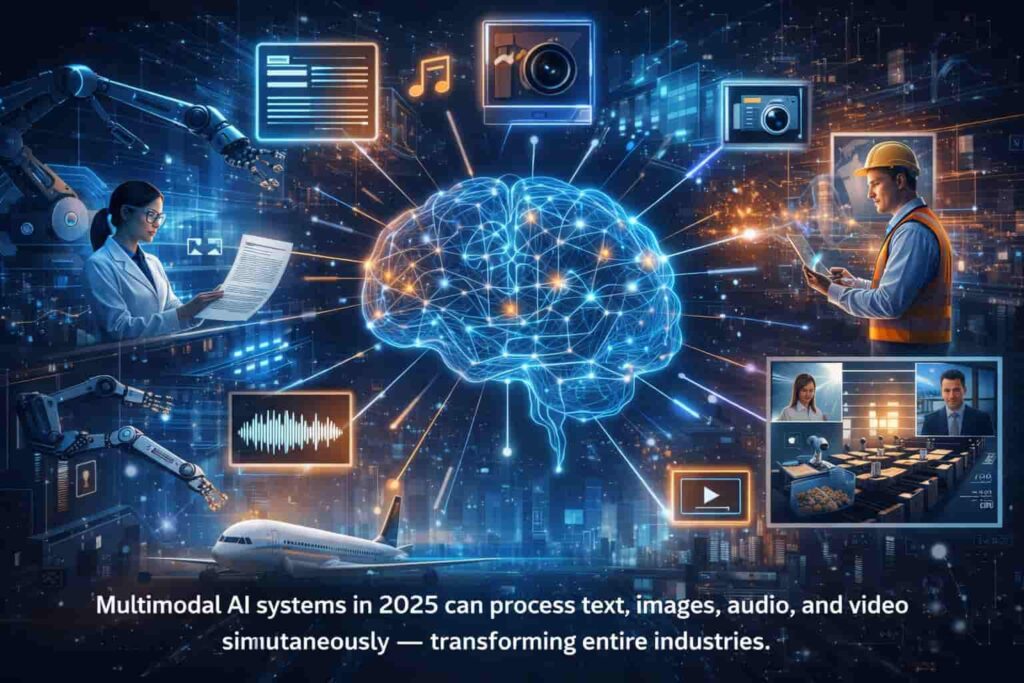
Artificial intelligence in 2025 has moved far beyond simple text-based chatbots. The most significant development is the emergence of truly multimodal AI systems — models that can process, understand, and generate text, images, audio, video, and code simultaneously within a single architecture.
OpenAI, Google DeepMind, Anthropic, and Meta have all released models capable of multimodal reasoning. These systems can analyze a photograph, read embedded text within it, answer spoken questions about its content, and generate related video — all in real time. The practical applications are enormous, from medical imaging analysis to automated video production for marketing teams.
AI Agents and Autonomous Workflows
Perhaps the most transformative AI trend of 2025 is the emergence of AI agents — autonomous systems that can plan, execute, and iterate on complex multi-step tasks without continuous human oversight. Unlike traditional AI assistants that respond to individual prompts, AI agents can break down a high-level goal into subtasks, use various tools and APIs, evaluate their own progress, and adjust their approach when something goes wrong.
Companies across industries are deploying AI agents for tasks like automated customer service escalation, code review and deployment, financial report generation, and supply chain optimization. Gartner has projected that by 2028, at least 15 percent of day-to-day work decisions will be made autonomously by agentic AI systems.
Regulation and Safety Concerns
The rapid deployment of AI has triggered a global regulatory response. The European Union’s AI Act, which began enforcement in phases throughout 2024 and 2025, establishes risk-based categories for AI systems and imposes strict requirements on “high-risk” applications in areas like healthcare, law enforcement, and employment. The United States has taken a more sector-specific approach, with executive orders and agency guidelines rather than comprehensive legislation.
Key safety concerns in 2025 include deepfake proliferation (particularly around elections), AI-generated misinformation, bias in automated hiring systems, and the environmental impact of training increasingly large AI models. The energy consumption required to train and run frontier AI models has become a major topic in digital news, with some estimates suggesting that a single large training run can consume as much electricity as a small city uses in a year.
Spatial Computing and the Future of AR/VR
Apple Vision Pro and the Spatial Computing Category
Apple’s Vision Pro, released in early 2024, established spatial computing as a legitimate product category rather than a niche curiosity. By 2025, the ecosystem has matured significantly. Third-party developers have created thousands of spatial apps, and Apple has released software updates that improve hand tracking, introduce new collaboration features, and reduce the device’s weight through hardware refinements.
The competition has responded. Meta’s Quest 3S offers a more affordable entry point for mixed reality experiences, while Samsung and Google have partnered on an Android-based XR platform that aims to bring spatial computing to a broader audience at lower price points.
Enterprise Applications Leading Adoption
While consumer adoption of spatial computing headsets remains modest, enterprise applications are driving real growth. Architects use spatial computing to walk clients through building designs before construction begins. Surgeons rehearse complex procedures using volumetric patient scans. Manufacturing companies train workers in virtual environments that replicate real factory floor conditions. These business-to-business use cases generate strong return on investment and are helping to fund continued development of the underlying hardware and software platforms.
The Metaverse in 2025: Quieter but Deeper
The metaverse hype that peaked in 2021-2022 has faded from mainstream digital news headlines, but the underlying technology continues to advance. Social VR platforms like VRChat, Rec Room, and Horizon Worlds maintain dedicated user bases, and new platforms focused on specific verticals (virtual concerts, educational environments, remote collaboration spaces) are finding product-market fit without the grandiose “metaverse” branding.
Quantum Computing Breakthroughs in 2026
Current State of Quantum Hardware
Quantum computing has made meaningful progress in 2026, though it remains in the early stages of practical utility. IBM, Google, and several well-funded startups have demonstrated quantum processors with hundreds of logical qubits, and error correction techniques have improved significantly. IBM’s roadmap targets a 100,000-qubit system by 2033, which would represent a major milestone toward general-purpose quantum computing.
Practical Applications Emerging
While a fully fault-tolerant, general-purpose quantum computer is still years away, specific quantum applications are already delivering value in 2025:
- Drug discovery: Pharmaceutical companies are using quantum simulations to model molecular interactions, potentially accelerating the development of new medications
- Financial modeling: Banks and hedge funds are exploring quantum algorithms for portfolio optimization and risk analysis
- Materials science: Quantum computing enables simulation of material properties at the atomic level, aiding the development of better batteries, superconductors, and catalysts
- Cryptography: The threat of quantum computers breaking current encryption standards has accelerated the development and deployment of post-quantum cryptographic algorithms
The Quantum Threat to Encryption
One of the most discussed topics in digital news related to quantum computing is its potential to break widely used encryption methods. RSA and ECC — the cryptographic foundations of internet security — are theoretically vulnerable to a sufficiently powerful quantum computer running Shor’s algorithm. In response, the U.S. National Institute of Standards and Technology (NIST) finalized its first set of post-quantum cryptography standards in 2024, and organizations worldwide are beginning the complex process of migrating to quantum-resistant encryption.
Cybersecurity Threats and Defense in 2026
AI-Powered Cyberattacks
The same AI capabilities that are transforming legitimate industries are also being weaponized by cybercriminals. In 2025, AI-powered phishing attacks are significantly more sophisticated than their predecessors. Attackers use large language models to generate highly personalized phishing emails that mimic the writing style of specific individuals, making them much harder to detect.
Deepfake technology has also become a serious cybersecurity threat. There have been documented cases of attackers using real-time deepfake video and audio during video calls to impersonate executives and authorize fraudulent financial transfers. A single incident in early 2024 involving a deepfake-based video conference resulted in a $25 million loss for a multinational corporation, and similar attacks have continued into 2025.
Zero Trust Architecture Becomes Standard
Zero Trust security — the principle that no user, device, or network should be automatically trusted — has moved from a buzzword to a practical implementation standard in 2025. Major enterprises are deploying continuous authentication, micro-segmentation, and least-privilege access controls across their IT environments. Cloud-native security platforms from companies like CrowdStrike, Zscaler, and Palo Alto Networks have made Zero Trust implementation more accessible to mid-market companies as well.
Ransomware Evolution
Ransomware remains the most financially impactful form of cybercrime in 2025. Attack groups have shifted toward “big game hunting” — targeting large enterprises, healthcare systems, and critical infrastructure for multi-million-dollar ransoms. Double and triple extortion tactics (encrypting data, threatening to leak it, and attacking the victim’s customers or partners) have become standard practice among sophisticated ransomware gangs.

Sustainable Tech: Green Innovation at Scale
Energy-Efficient Computing
The environmental cost of computing — particularly AI training and cryptocurrency mining — has driven significant investment in energy-efficient computing architectures. ARM-based processors, which consume significantly less power than traditional x86 chips, are gaining ground in data centers. Apple’s M-series chips have demonstrated that ARM architecture can deliver desktop-class performance at a fraction of the power consumption, and server versions of ARM processors from Ampere Computing and AWS (Graviton) are being widely adopted.
Green Data Centers
Major cloud providers including Amazon Web Services, Microsoft Azure, and Google Cloud have committed to operating on 100 percent renewable energy. In 2025, these commitments are being tested by the explosive growth in AI workloads, which require enormous amounts of compute power and cooling. Innovative cooling solutions — including liquid cooling, immersion cooling, and even underwater data centers — are being deployed to reduce the environmental footprint of this computational demand.
Circular Economy in Electronics
The growing awareness of electronic waste has spurred initiatives in circular economy design. Companies like Fairphone, Framework, and even Apple (with its increased focus on recycled materials) are designing products for repairability and longevity rather than planned obsolescence. The European Union’s right-to-repair legislation, which took effect in 2024, requires manufacturers to make spare parts and repair manuals available to consumers and independent repair shops.
5G and Beyond: The Connectivity Revolution
5G Reaching Critical Mass
After years of gradual rollout, 5G networks have reached meaningful coverage levels in major markets across North America, Europe, and Asia by 2025. Mid-band 5G (the frequencies that offer the best balance of speed and coverage) is now available to the majority of urban and suburban populations in developed countries.
Real-world 5G speeds typically range from 100 to 300 Mbps for mid-band connections, with millimeter-wave (mmWave) deployments offering speeds exceeding 1 Gbps in dense urban areas and stadiums. While not the transformative leap that early marketing promised, 5G has meaningfully improved mobile connectivity for streaming, gaming, and remote work applications.
The 6G Research Horizon
While 5G is still being deployed, research into 6G has accelerated. Expected to arrive around 2030, 6G promises theoretical speeds of 1 terabit per second, sub-millisecond latency, and native support for AI-integrated networking. Countries including South Korea, Japan, China, and the United States have launched national 6G research programs. Key 6G technologies being explored include terahertz frequency communications, intelligent reflecting surfaces, and integrated sensing and communication (ISAC) systems.
Digital Health and Wearable Technology
Wearables as Medical Devices
The line between consumer wearables and medical devices continues to blur in 2025. The Apple Watch, Samsung Galaxy Watch, and newer entrants like the Oura Ring now offer FDA-cleared features for blood oxygen monitoring, ECG readings, irregular heart rhythm detection, and (in newer models) continuous blood glucose estimation.
These devices are generating enormous amounts of health data that, when aggregated and analyzed with AI, can identify patterns invisible to traditional medical observation. Researchers are using wearable data to study sleep disorders, predict cardiac events, monitor medication adherence, and even detect early signs of neurodegenerative diseases.
Telehealth 2.0
Telehealth, which saw massive adoption during the COVID-19 pandemic, has evolved into a more sophisticated and integrated component of healthcare delivery. In 2025, telehealth platforms offer AI-powered triage, remote patient monitoring through connected devices, asynchronous specialist consultations, and integration with electronic health record systems. The technology has been particularly impactful in rural and underserved communities where access to specialist care has historically been limited.
Mental Health Technology
Digital mental health solutions represent one of the fastest-growing segments of health technology. AI-powered therapy chatbots, mood-tracking applications, meditation platforms, and digital cognitive behavioral therapy (CBT) programs have gained mainstream acceptance. While these tools are not replacements for professional mental health care, they provide accessible, affordable support that can complement traditional therapy and help identify individuals who need professional intervention.
Blockchain, Web3, and Decentralized Finance in 2026
Beyond the Speculation Phase
The blockchain and cryptocurrency sector in 2025 has largely moved past the speculative frenzy of 2021-2022. The focus has shifted from trading memecoins to building practical infrastructure. Enterprise blockchain applications — particularly in supply chain management, identity verification, and cross-border payments — are delivering measurable business value.
Stablecoins and CBDCs
Stablecoins (cryptocurrencies pegged to fiat currencies like the US dollar) have become a significant component of global financial infrastructure. Monthly stablecoin transaction volumes regularly exceed those of major payment networks. Meanwhile, central bank digital currencies (CBDCs) are being piloted by over 130 countries, with China’s digital yuan (e-CNY) among the furthest along in terms of real-world deployment and adoption.
DeFi Maturation
Decentralized finance (DeFi) protocols have matured significantly, with improved security auditing, insurance products, and regulatory compliance features. Institutional participation in DeFi has grown as regulatory clarity has improved in major markets, though significant regulatory uncertainty remains in the United States.
Top Tech Trends 2026: Impact Comparison Table
| Technology Trend | Maturity Level | Consumer Impact (2025) | Enterprise Impact (2025) | Investment Risk |
|---|---|---|---|---|
| Artificial Intelligence | Mainstream | Very High | Very High | Medium |
| Spatial Computing (AR/VR) | Early Mainstream | Medium | High | Medium-High |
| Quantum Computing | Early Stage | Low | Medium | High |
| Cybersecurity (AI-powered) | Mainstream | High | Very High | Low |
| Sustainable Tech | Growth Phase | Medium | High | Low-Medium |
| 5G / 6G | Mainstream (5G) / Research (6G) | High | High | Low |
| Digital Health / Wearables | Growth Phase | High | High | Low-Medium |
| Blockchain / Web3 / DeFi | Maturing | Medium | Medium-High | Medium-High |
How to Stay Updated with Digital News
Trusted Sources for Technology News
In an era of information overload, choosing reliable sources for digital news is critical. Here are the categories of sources that provide the highest signal-to-noise ratio:
- Major tech publications: Ars Technica, The Verge, Wired, and TechCrunch provide well-researched reporting with editorial standards
- Academic and research sources: arXiv (for AI and computer science papers), Nature, and MIT Technology Review bridge the gap between academic research and general readership
- Industry analyst firms: Gartner, Forrester, and IDC publish research reports that provide data-driven analysis of technology trends
- Newsletters: Curated newsletters like Stratechery (by Ben Thompson), The Information, and Benedict Evans’ newsletter provide thoughtful analysis rather than breaking-news churn
- Community platforms: Hacker News, relevant subreddits (r/technology, r/MachineLearning, r/netsec), and specialized Discord servers provide real-time discussion and diverse perspectives
Critical Thinking in the Age of AI-Generated Content
As AI-generated content proliferates across the internet, critical thinking skills become even more important when consuming digital news. Always verify claims against multiple independent sources, check the publication date of articles, look for author credentials and transparency about methodology, and be skeptical of content that seems designed to provoke an emotional reaction rather than inform.

Frequently Asked Questions (FAQ)
What are the top technology trends to watch in 2026?
The most impactful technology trends in 2025 include multimodal AI and autonomous AI agents, spatial computing driven by devices like Apple Vision Pro, quantum computing milestones, AI-powered cybersecurity threats and defenses, sustainable computing practices, 5G maturation, digital health wearables, and blockchain infrastructure development. AI remains the single most transformative force across all of these areas.
How is artificial intelligence changing in 2026 compared to 2025?
The most significant shift from 2026 to 2025 is the move from single-purpose AI chatbots to multimodal AI agents capable of autonomous, multi-step task execution. AI models in 2026 can process and generate text, images, audio, and video simultaneously, and AI agent frameworks allow these models to use external tools, evaluate their own output, and iterate without constant human oversight.
Is quantum computing a real threat to cybersecurity in 2026?
Not yet in practical terms — no quantum computer in 2026 has sufficient power to break current encryption standards. However, the threat is real enough that NIST finalized post-quantum cryptography standards in 2024, and organizations are beginning to migrate to quantum-resistant algorithms. The principle of “harvest now, decrypt later” (where adversaries collect encrypted data today to decrypt it once quantum computers mature) makes this a present concern for data with long-term sensitivity.
What is spatial computing and why does it matter?
Spatial computing refers to technology that blends digital content with the physical world, allowing users to interact with 3D digital objects as if they existed in their real environment. It matters because it represents a potential next paradigm in human-computer interaction beyond smartphones and traditional screens. Enterprise applications in architecture, healthcare, manufacturing training, and remote collaboration are driving current adoption and ROI.
How can I protect myself from AI-powered cyber threats?
Enable multi-factor authentication on all accounts, be skeptical of any unexpected communication requesting urgent action or financial transfer (even if it appears to come from someone you know), use a reputable password manager with unique passwords for every service, keep all software updated, and consider using email services with AI-powered phishing detection. For businesses, implementing Zero Trust architecture and conducting regular security awareness training are essential.
Are cryptocurrencies and blockchain still relevant in 2026?
Yes, though the narrative has shifted from speculative trading to practical infrastructure. Stablecoins have become a significant component of global payments, enterprise blockchain applications deliver real business value in supply chain and identity management, and central banks worldwide are piloting digital currencies. The speculative frenzy has cooled, which many industry observers consider a sign of maturation rather than decline.
🎯 How to enter the challenge:
- Sign Up: Drop your name and email in the widget below.
- Beat the Quiz: Answer 5 questions. The higher your score, the better your prize tier (ranging from Starter all the way to Legendary).
- Crucial Final Step (TikTok): You’ll get a unique code once you finish. You must click the button, head over to our TikTok, and drop your code in the comments. If you skip this, your entry won’t count!
👇 Scroll down and start the challenge right now. Good luck!
Play. Answer.
Win Big.
Score high on 5 riddles to unlock your prize tier — from gift cards to iPhones. Every correct answer levels you up.
No purchase necessary · Must be 18+ · One entry per person
Register to Play
Two fields. That’s all we need to get you started.
🔒 Your data is encrypted and never shared.
Evaluating your performance…
Verify on TikTok
Comment your unique verification code on our TikTok post to confirm your entry. Without it, your prize cannot be processed.
⚠️ Your entry status: PENDING VERIFICATION
We review comments daily. Winners are contacted via email within 48 hours.
Already Entered
You’ve already played. Only one entry per person is allowed. Check your email for updates on your prize status.