
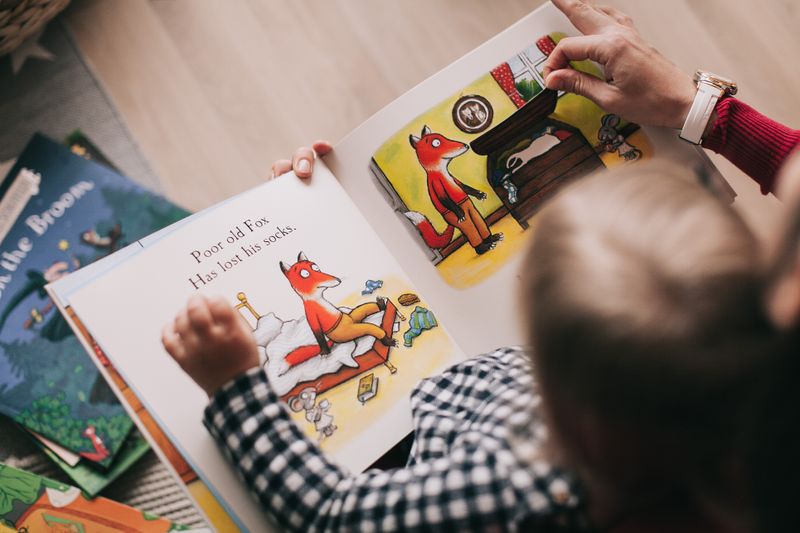

Self-publishing on Amazon Kindle Direct Publishing (KDP) has transformed from a niche hobby into a multi-million-dollar digital asset class. Among all self-publishing categories, children’s picture books and early reader storybooks represent one of the most lucrative and evergreen segments. Parents, grandparents, educators, and libraries purchase hundreds of millions of physical paperbacks and Kindle editions each year. Historically, the barrier to entering the children’s book market was immense: hiring a professional illustrator for a 28-page full-color picture book cost between $2,000 and $5,000, pricing out indie authors before their first sale. In 2026, generative AI models—specifically Claude 3.7 for lyrical age-appropriate storytelling, Midjourney v6 for consistent character rendering, and Canva for print-ready formatting—allow solo creators to publish broadcast-quality illustrated children’s books in a matter of days. In this comprehensive 2026 guide, we explore Amazon KDP’s AI content guidelines, solve the character consistency puzzle, and walk through the exact blueprint to scale a catalog of profitable children’s titles.
Table of Contents
- The Economics of Amazon KDP Children’s Books
- Story Concept and Scriptwriting with Claude 3.7 Sonnet
- Cracking the Midjourney Character Consistency Puzzle
- Formatting and Layout in Canva or Adobe InDesign
- Amazon KDP Listing Optimization and Category Domination
- Scaling to a Multi-Book Catalog and Evergreen Royalties
The Economics of Amazon KDP Children’s Books
Understanding print-on-demand mechanics, royalty calculations, and passive revenue longevity.

Figure 1: The Economics of Amazon KDP Children’s Books
How Amazon KDP Print-on-Demand Works
Amazon KDP operates on a zero-inventory, print-on-demand model:
1. You upload your manuscript PDF and high-resolution cover wrap to the KDP dashboard.
2. Your book receives an official Amazon product page with Prime 2-day delivery badges.
3. When a customer orders a physical copy, Amazon prints, binds, packages, and ships the book from their local fulfillment center.
4. Amazon deducts the printing cost (typically $3.65 for a standard 24-page 8.5×8.5 inch premium color paperback) and their 40% distribution cut. You pocket the remaining 60% royalty!
Pricing a 24-page color children’s book at $10.99 nets you approximately $2.94 in net profit per sale. Selling just 10 copies a day across a small 5-book catalog yields over $880/month in completely hands-off passive royalties.
Amazon’s Official AI Content Disclosure Rules in 2026
Amazon requires publishers to disclose whether their text, images, or translations were ‘AI-generated’ during the KDP upload workflow. Checking the ‘AI-generated’ box does NOT restrict your book from publication, nor does it suppress your organic search rank. Amazon simply tracks synthetic assets to preserve platform integrity and copyright compliance. As long as your book is formatted correctly, has a compelling original storyline, and provides real value to young readers, it is fully eligible for worldwide sale.
Story Concept and Scriptwriting with Claude 3.7 Sonnet
Crafting engaging, rhythmic, and educational narratives calibrated to specific childhood age tiers.

Figure 2: Story Concept and Scriptwriting with Claude 3.7 Sonnet
Targeting Specific Developmental Age Tiers
A critical error novice authors commit is writing a generic story with no specific age target. Successful children’s books target narrow developmental windows:
– Toddlers (Ages 1 – 3): 100 to 200 words total. Focus on primary colors, farm animals, sensory tactile descriptions, and repetitive rhythmic refrains.
– Early Readers (Ages 4 – 6): 400 to 700 words. Focus on social-emotional learning (sharing, managing big emotions, starting school), simple sentence structures, and playful vocabulary.
– Emerging Readers (Ages 6 – 8): 800 to 1,500 words. Chaptered storybooks, light problem-solving, and adventurous moral journeys.
The Prompt Framework for Age-Appropriate Rhyming and Pacing
Use Claude 3.7 Sonnet to draft the narrative in a structured 24-page layout:
‘Act as an award-winning children’s author. Write a 24-page illustrated storybook for children aged 3-5 titled [Title]. The theme is emotional resilience and friendship. Structure the output into 12 two-page spreads. For each spread, provide: (1) 2 to 4 lines of lyrical rhyming verse, and (2) An exact descriptive visual prompt for the illustrator depicting the characters’ actions, lighting, and expressions.’
Cracking the Midjourney Character Consistency Puzzle
How to keep your illustrated characters looking identical across all 24 pages.

Figure 3: Cracking the Midjourney Character Consistency Puzzle
The Character Reference Parameter (`–cref`)
Historically, maintaining identical character faces across varied poses and camera angles was nearly impossible with AI. Midjourney v6 solved this with the `–cref` (Character Reference) parameter:
1. Generate your main character in a neutral pose on a clean background:
`/imagine cute whimsical 5-year-old girl with curly red hair, green overalls, yellow rubber boots, watercolor illustration style, clean white background –ar 1:1 –v 6.1`
2. Save the image and copy its public image URL.
3. In all subsequent scene prompts, append `–cref [URL]` at the end of the prompt. Midjourney will lock in the character’s facial features, hair texture, and clothing while allowing you to change camera angles, expressions, and environmental backgrounds!
Style Reference Matching (`–sref`)
To ensure the artistic watercolor or gouache texture remains uniform across every page, use the `–sref [URL]` parameter pointing to your first approved page. This locks the color palette, line weight, and background brushwork across the entire manuscript.
Formatting and Layout in Canva or Adobe InDesign
Meeting Amazon KDP’s strict print specifications and bleed requirements.

Figure 4: Formatting and Layout in Canva or Adobe InDesign
Understanding Bleed and Trim Sizes (8.5 x 8.5 Inches)
The most popular and profitable format for children’s picture books is the square 8.5 x 8.5 inch format.
– Bleed Settings: Because illustrations extend all the way to the edge of the printed page, you must design with a 0.125-inch bleed margin on all outer edges (document dimensions: 8.625 x 8.75 inches).
– Safe Zone: Keep text, character faces, and important dialogue at least 0.375 inches away from the trim line and gutter to prevent them from being cut off during industrial binding.
Typography and Font Legibility
Children learning to read require large, highly legible serif or clean sans-serif typography (minimum 18pt to 24pt font size) with high contrast against the background illustration. Never place dark text directly over dark illustrations without a soft white gradient container.
Amazon KDP Listing Optimization and Category Domination
Selecting low-competition BISAC categories and high-converting 7 backend keywords.

Figure 5: Amazon KDP Listing Optimization and Category Domination
Keyword Research with Publisher Rocket
Use tools like Publisher Rocket to identify children’s sub-categories where the top-selling books have modest review counts:
– Instead of ‘Children’s Books’ (hopelessly saturated), target ‘Children’s Mindfulness & Feelings Books’, ‘Children’s Farm Animal Bedtime Stories’, or ‘STEM Picture Books for Preschoolers’.
– Fill all 7 KDP backend keyword slots with exact customer search queries, avoiding punctuation and repetitive words.
Designing a High-Converting Cover Wrap
A book’s cover is its billboard. A winning children’s book cover features an oversized, expressive character face looking directly at the viewer, bold vibrant colors, and a whimsical, easily readable title font visible even on a tiny mobile search thumbnail.
Scaling to a Multi-Book Catalog and Evergreen Royalties
Building a cohesive author brand and cross-promoting sequels to compound sales.

Figure 6: Scaling to a Multi-Book Catalog and Evergreen Royalties
The ‘Character Series’ Playbook
Publishing one book makes you an author; publishing a 5-book series makes you a commercial brand. Create an endearing protagonist (e.g., ‘Barnaby the Bear’) and author seasonal or thematic sequels (‘Barnaby Goes to School’, ‘Barnaby Learns to Share’, ‘Barnaby’s Autumn Adventure’). Parents who buy Book 1 will eagerly purchase the entire collection, compounding your customer lifetime value.
Amazon KDP Children’s Book Production & Unit Economics (8.5×8.5 Inch Premium Color Paperback)
| Retail List Price | Amazon 40% Share | KDP Print Cost (24 Pages) | Author Royalty per Book | Monthly Profit (100 Sales) | Monthly Profit (500 Sales) |
|---|---|---|---|---|---|
| $8.99 (Budget Tier) | $3.60 | $3.65 | $1.74 | $174.00 / mo | $870.00 / mo |
| $9.99 (Standard Market) | $4.00 | $3.65 | $2.34 | $234.00 / mo | $1,170.00 / mo |
| $11.99 (Premium Glossy) | $4.80 | $3.65 | $3.54 | $354.00 / mo | $1,770.00 / mo |
| $13.99 (Hardcover Edition) | $5.60 | $6.85 (Hardcover unit) | $1.54 | $154.00 / mo | $770.00 / mo |
| $2.99 (Kindle E-Book 70% plan) | $0.90 | $0.00 (Zero print cost) | $2.09 | $209.00 / mo | $1,045.00 / mo |
Source: TechSide AI industry benchmarks, platform fee schedules, and verified creator earnings data (2026).
Explore Related AI Side Hustles & Tech Money Guides:
- [[INTERLINK: 10 Best AI Side Hustles to Make $3,000/Month in 2026 (Beginner to Pro Guide)]]
- [[INTERLINK: How to Create and Sell AI-Generated Digital Art, Stickers, and Wall Prints on Etsy]]
- [[INTERLINK: 12 Best Free AI Tools for Productivity and Business in 2026]]
- [[INTERLINK: How to Sell Notion Templates Online: From Idea to $5,000/Month Passive Income]]
Frequently Asked Questions (FAQs)
Does Amazon KDP allow books created with AI in 2026?
Yes. Amazon KDP explicitly permits AI-generated text and images. Authors must simply check ‘Yes’ to the AI-content disclosure question during book setup. Amazon will not reject your book or penalize your search ranking for using AI tools.
How do I make sure characters look the same on every page in Midjourney?
Use the `–cref` (Character Reference) parameter in Midjourney v6. Generate a master image of your character, copy its public URL, and include `–cref [URL]` in all subsequent scene prompts. Pair this with `–sref` (Style Reference) to lock in identical artistic brushstrokes across the entire book.
What are the best dimensions for a children’s picture book on Amazon?
The industry standard and most popular dimensions for children’s picture books on Amazon KDP are 8.5 x 8.5 inches (square) or 8.5 x 11 inches (portrait). The 8.5×8.5 inch square format is universally preferred by parents for bedtime lap reading.
How much upfront money does it cost to self-publish a children’s book on KDP?
Amazon KDP is free to use—there are zero upfront listing or publication fees. You only pay for your software tools (e.g., Midjourney at $30/month, Claude at $20/month, and free Canva). You can create and publish an entire children’s book for under $60 in total software costs.
Do I need to buy an ISBN number to sell children’s books on Amazon?
No. Amazon KDP provides a free 13-digit ISBN for paperbacks and hardcovers published through their platform. If you want to sell your book in brick-and-mortar bookstores outside Amazon, you can purchase your own official ISBN through Bowker (in the US).
Key Takeaway: Building Your AI Income Stream
Publishing AI-illustrated children’s books on Amazon KDP is one of the most fulfilling, creative, and genuinely passive digital side hustles of 2026. By harnessing Claude 3.7 for emotional storytelling and Midjourney v6’s character consistency parameters, you can produce stunning, bookstore-quality storybooks in a single weekend. Focus on specific childhood developmental milestones, master Amazon’s 300 DPI print-ready formatting, and build a cohesive character series to establish an enduring digital royalty portfolio.