
Table of Contents
- The Inflation Defense Strategy: Monetizing Everyday Non-Discretionary Expenses
- The Merchant Category Code (MCC) Trap: Supermarkets vs Wholesale Clubs vs Superstores
- The Heavy Hitter for Groceries: American Express Blue Cash Preferred (6% Cashback)
- The 5% Surgical Strike: Citi Custom Cash Card for Dedicated Fuel Purchases
- Wholesale Club Optimization: Maximizing Costco and Sam’s Club Fuel & Groceries
- The 2% Catch-All Floor: Citi Double Cash & Wells Fargo Active Cash
- Annual Net Math: Calculating Break-Even Points After Annual Fees
- Comparison Table: Top Everyday Cashback Cards Compared by Category & Caps
- Frequently Asked Questions
The Inflation Defense Strategy: Monetizing Everyday Non-Discretionary Expenses

Over the past several years, macroeconomic inflation has taken a punishing bite out of middle-class household budgets. Supermarket grocery receipts, weekly fuel fill-ups at the gas pump, and essential home supplies have seen cumulative price increases exceeding 25% to 35%. While households can choose to postpone international vacations, reduce fine dining, or cancel luxury streaming subscriptions during inflationary periods, food and transportation are non-negotiable survival expenses. You cannot stop eating groceries, nor can you stop fueling your vehicle to commute.
Because these expenses are completely unavoidable and recur every week, they represent the single highest-yield opportunity for systematic personal finance optimization. The average American household spends between $8,000 and $12,000 annually on groceries and another $2,500 to $4,500 on gasoline and EV charging.
If you pay for these purchases using a standard debit card or a generic 1% bank credit card, you are leaving $500 to $800 in cold, tax-free cash on the table every single year. By strategically combining two or three complementary cashback credit cards, an everyday household can lock in an untouchable 5% to 6% net cashback rebate across 100% of their annual grocery and fuel spending. In this guide, we map out the mathematically optimal card combinations to insulate your wallet against inflation.
The Merchant Category Code (MCC) Trap: Supermarkets vs Wholesale Clubs vs Superstores

The single most frustrating pitfall beginners encounter with grocery credit cards is the Merchant Category Code (MCC) Exclusion. Credit card networks (Visa, Mastercard, Amex) categorize merchants based on standardized four-digit MCC codes:
Understanding Store Classifications
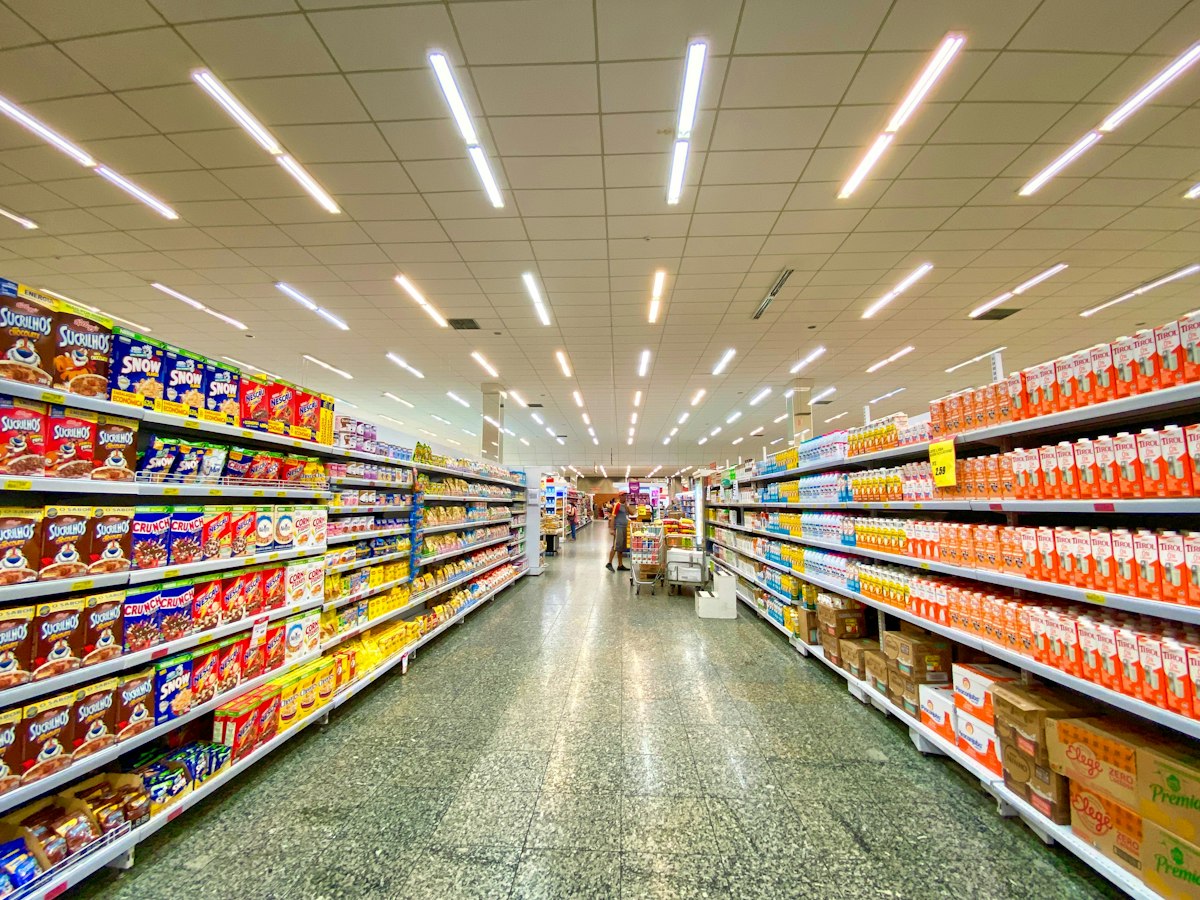
- Traditional Supermarkets (Qualifies for High Rewards): Kroger, Publix, Safeway, ALDI, Trader Joe’s, Whole Foods, H-E-B, Stop & Shop. These carry standard supermarket MCCs and trigger full 5% to 6% cashback multipliers.
- Superstores (Strictly Excluded by Most Cards): Walmart and Target. Most credit card agreements explicitly state that superstores do NOT count as supermarkets. Swiping a grocery card at Walmart yields only the baseline 1% rate.
- Wholesale Clubs (Excluded by Standard Grocery Multipliers): Costco, Sam’s Club, and BJ’s Wholesale Club. These carry wholesale club MCCs and do not trigger traditional supermarket bonuses.
Understanding this distinction is crucial: if your family buys 80% of your groceries at Walmart or Costco, you need a specialized wholesale/superstore card strategy rather than a traditional supermarket card.
The Heavy Hitter for Groceries: American Express Blue Cash Preferred (6% Cashback)
For households that purchase groceries at traditional supermarkets, the American Express Blue Cash Preferred (BCP) is the undisputed champion of the rewards landscape:
Blue Cash Preferred Earning Structure
- 6% Cashback at U.S. Supermarkets: Up to $6,000 in purchases per calendar year (then 1%). Maxing out the $6,000 annual spend cap yields an astronomical $360 in pure cash back every year.
- 6% Cashback on Select U.S. Streaming Subscriptions: Covers Netflix, Disney+, Hulu, Spotify, Apple Music, and YouTube Premium.
- 3% Cashback at U.S. Gas Stations & Transit: Uncapped earnings on gas, parking, tolls, trains, and rideshares.
- Annual Fee Math: Features a $95 annual fee (typically waived the first year). Even after subtracting the $95 fee in year two, maxing out the grocery cap leaves you with $265 in net profit on groceries alone—vastly outperforming any $0 annual fee 3% card (which nets only $180 on $6,000 spend).
The 5% Surgical Strike: Citi Custom Cash Card for Dedicated Fuel Purchases

To cover fuel fill-ups without diluting your returns, pair the Amex Blue Cash Preferred with the Citi Custom Cash Card ($0 Annual Fee):
The Single-Category Automated Algorithm
The Citi Custom Cash automatically awards 5% cash back on your highest eligible spending category each billing cycle, up to $500 spent (then 1%). Eligible categories include Restaurants, Gas Stations, Grocery Stores, Select Travel, Home Improvement, and Fitness Clubs.
The ‘Gas Only’ Surgical Execution
Designate your physical Citi Custom Cash card exclusively for gasoline and EV charging. Store it in your car’s center console and never swipe it for anything else. If your household spends $250 to $450 per month on gas, every single dollar automatically earns a flat 5% cash back ($150 to $270 per year in cash rebates) with zero mental effort and zero annual fees.
Wholesale Club Optimization: Maximizing Costco and Sam’s Club Fuel & Groceries

If your household does the bulk of its grocery and fuel shopping at wholesale clubs, standard cards fail. Deploy these specialized instruments:
1. For Costco Enthusiasts (Costco Anywhere Visa by Citi)
Costco warehouses only accept Visa cards. The official Costco Anywhere Visa awards 4% cash back on eligible gas and EV charging worldwide (for the first $7,000 per year, then 1%), 3% on restaurants and eligible travel, and 2% on all purchases at Costco and Costco.com ($0 card annual fee with paid Costco membership).
2. For Sam’s Club Shoppers (Sam’s Club Mastercard)
The Sam’s Club Mastercard awards a massive 5% cash back on eligible gas worldwide (on the first $6,000 per year, then 1%), and 3% on Sam’s Club purchases for Plus members.
3. The Venmo Credit Card (The Wholesale Hack)
The Venmo Credit Card (Visa) awards 3% cash back on your top spending category. Crucially, Venmo’s grocery category explicitly includes wholesale clubs like Costco and Sam’s Club as eligible grocery merchants, making it a premier card for warehouse food runs.
The 2% Catch-All Floor: Citi Double Cash & Wells Fargo Active Cash

No multi-card wallet setup is complete without a solid 2% Flat Catch-All Foundation for purchases that fall outside bonus categories (e.g., auto repairs, medical copays, home utilities, retail shopping):
Top 2% Flat Cashback Cards ($0 Annual Fee)
- Wells Fargo Active Cash Card: Unlimited 2% cash rewards on all purchases with no category tracking or quarterly activations required. Includes up to $600 in cell phone protection.
- Citi Double Cash Card: Earns 1% when you buy and 1% as you pay your bill, netting 2% cash back. Earns points that can be pooled with the Citi Custom Cash and transferred to airline partners.
Annual Net Math: Calculating Break-Even Points After Annual Fees
Let us model the real-world mathematical returns of the ‘Power Trio’ Combination (Amex Blue Cash Preferred + Citi Custom Cash + Wells Fargo Active Cash) for an average household spending $500/month on groceries, $300/month on gas, and $1,000/month on other general expenses:
The Mathematical Balance Sheet
- Groceries ($6,000/year on Amex BCP @ 6%): $360 earned. Minus $95 annual fee = $265 net profit.
- Gasoline ($3,600/year on Citi Custom Cash @ 5%): $180 earned. Zero fee = $180 net profit.
- Streaming ($600/year on Amex BCP @ 6%): $36 earned.
- Catch-All ($12,000/year on Active Cash @ 2%): $240 earned. Zero fee = $240 net profit.
- Total Annual Net Cash Returned to Your Bank: $721.00 every single year in tax-free cash back.
Comparison Table: Top Everyday Cashback Cards Compared by Category & Caps
| Card Name | Annual Fee | Grocery Reward Rate | Gas Station Reward Rate | Annual Category Caps |
|---|---|---|---|---|
| Amex Blue Cash Preferred | $95 (Waived Yr 1) | 6% Cash Back | 3% Cash Back | $6,000/yr on groceries (then 1%) |
| Citi Custom Cash | $0 | 5% (If top category) | 5% (If top category) | $500/billing cycle (then 1%) |
| Costco Anywhere Visa | $0 (With membership) | 2% at Costco | 4% worldwide gas/EV | $7,000/yr on gas (then 1%) |
| Capital One SavorOne | $0 | 3% Cash Back | 1% Cash Back | Uncapped grocery & dining spend |
| Wells Fargo Active Cash | $0 | 2% Flat (Catch-all) | 2% Flat (Catch-all) | Completely Uncapped |
Frequently Asked Questions
Editorial Disclosure: TechSide AI delivers rigorous, independent technology evaluations, financial analyses, and hardware benchmarks. We may earn affiliate commissions from financial or software products purchased through links on our site. This never compromises our scoring methodology, financial modeling, or editorial independence.