Read, Play, and Win Big
Make sure to read the full article below to get all the details on this challenge. We’ve put together a massive prize pool featuring the newest iPhones, gaming PCs, gift cards, consoles, and premium headsets. Your knowledge is your ticket to win!
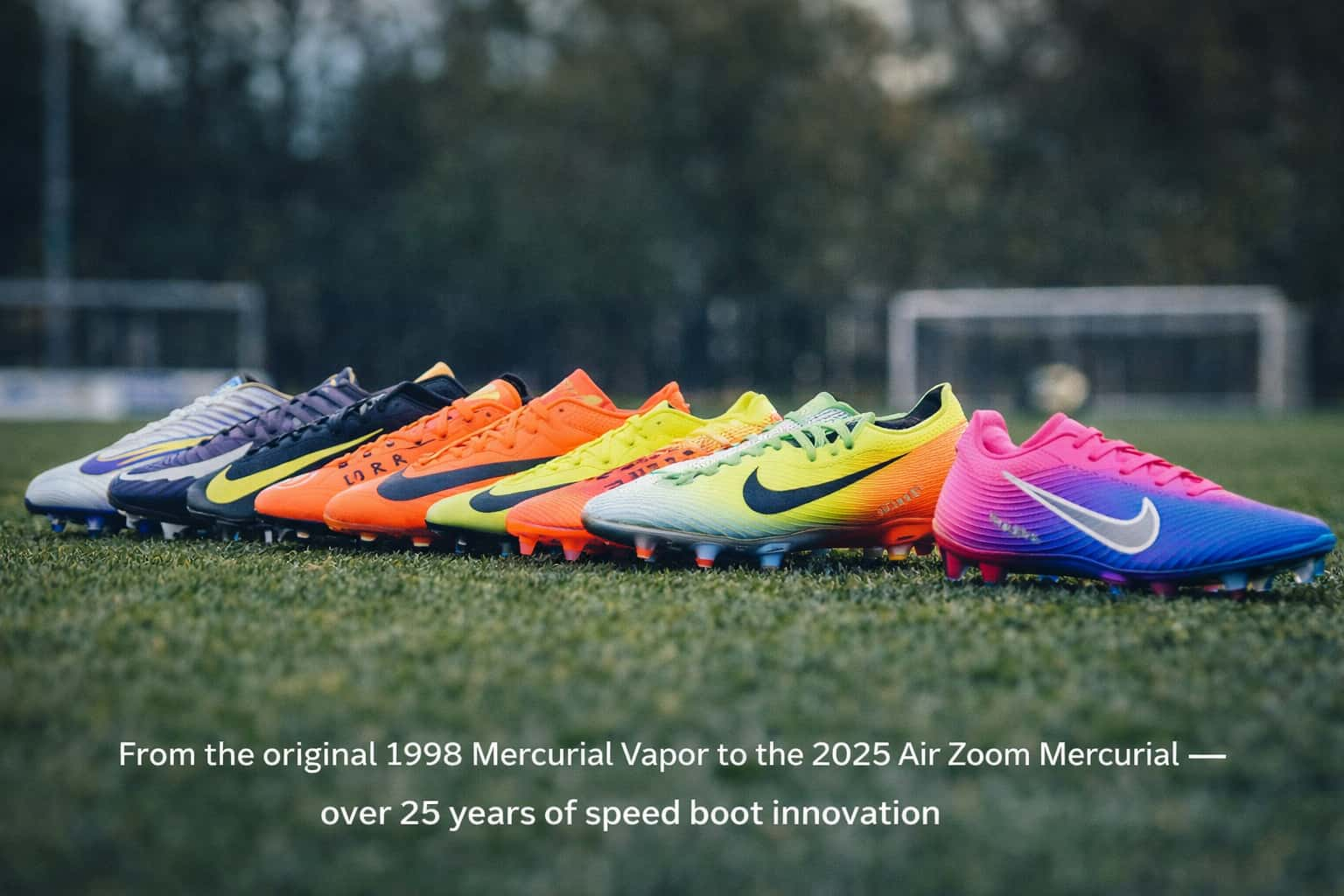
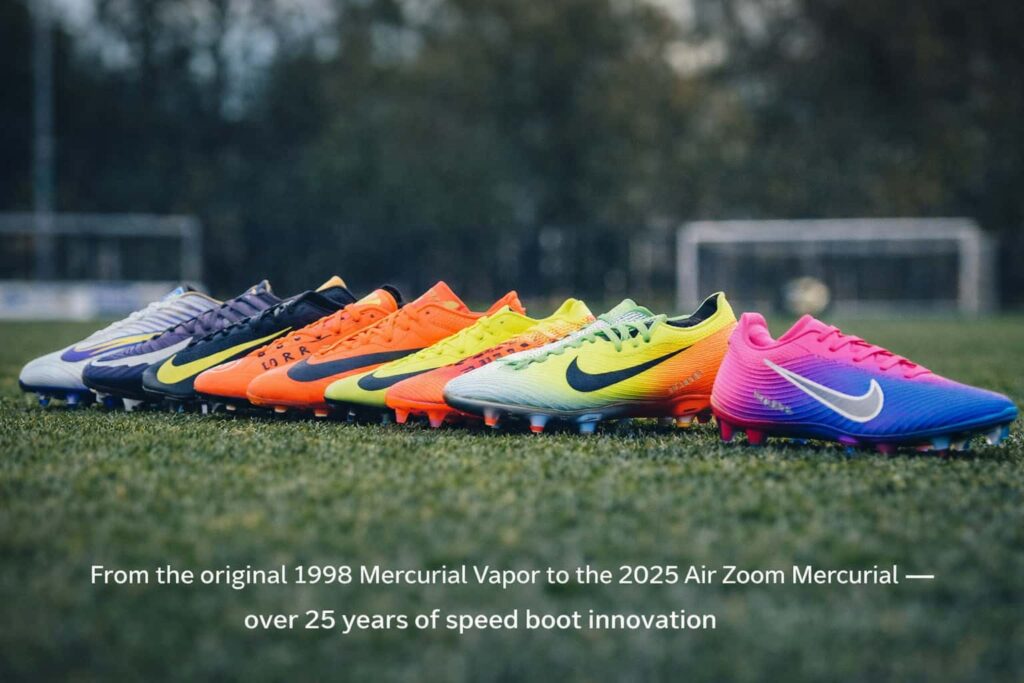
The Nike Air Zoom Mercurial represents the cutting edge of football boot engineering — a shoe designed from the ground up for speed, agility, and explosive acceleration. Since Nike first introduced the Mercurial line in 1998 with the iconic R9 Mercurial Vapor worn by Ronaldo at the World Cup in France, the series has been synonymous with the fastest players on the planet. In 2025, the Air Zoom Mercurial takes that legacy to a new level by integrating Nike’s revolutionary Air Zoom cushioning technology directly into a football boot for the first time.
This comprehensive guide covers everything you need to know about the Nike Air Zoom Mercurial: the technology behind it, how it performs on the pitch, the best colorways available, how it compares to rival speed boots from Adidas and Puma, and practical advice on sizing, maintenance, and where to purchase authentic pairs.
The Evolution of the Nike Mercurial Line
1998: The Birth of the Speed Boot
The original Nike Mercurial Vapor debuted at the 1998 FIFA World Cup in France, worn by Brazilian striker Ronaldo (R9). It was a revolutionary concept: a football boot designed primarily for speed rather than touch or power. Weighing significantly less than competitors and featuring a streamlined silhouette, the Mercurial Vapor established a new category in football footwear that every major brand would eventually follow.
The boot featured a synthetic upper (unusual at a time when kangaroo leather was standard), a visible Air Zoom unit in the forefoot, and an aggressive stud configuration optimized for rapid acceleration. It was controversial among purists who believed leather was essential for ball control, but Ronaldo’s electrifying performances wearing them silenced the critics.
2000s: The Vapor Era
Throughout the 2000s, the Mercurial Vapor series continued to evolve. Each generation reduced weight, improved fit, and refined the stud pattern for better traction on different surfaces. Cristiano Ronaldo became the signature athlete for the Mercurial line, replacing the original Ronaldo as the face of speed-focused football boots. His partnership with Nike helped the Mercurial become the most visible and commercially successful speed boot in the world.
2010s: The Superfly Innovation
Nike introduced the Mercurial Superfly in 2014, featuring the revolutionary Dynamic Fit collar — a sock-like ankle extension that provided a more connected feel between foot and boot. This design was initially polarizing (some players found the collar uncomfortable or restrictive), but it proved influential and was widely copied across the industry. The Superfly also introduced Flyknit technology to football boots, replacing traditional synthetic uppers with a knitted material that offered better breathability, flexibility, and fit.
2020s: The Air Zoom Mercurial Revolution
The current generation — the Air Zoom Mercurial — represents the most significant technological leap in the line’s history. By integrating a full-length Air Zoom unit into the soleplate of a football boot, Nike created a shoe that provides energy return and cushioning without adding weight. This innovation addresses one of the traditional trade-offs in speed boot design: the conflict between lightweight construction and adequate cushioning for the demands of professional football.
Air Zoom Technology Explained: How It Works in Football Boots
What Is Nike Air Zoom?
Nike Air Zoom is a cushioning technology that uses tightly stretched fibers within a pressurized Air unit to provide a responsive, springy feel underfoot. Unlike standard Nike Air units (which use only pressurized air), Zoom Air units include internal fibers that snap back into shape after compression, delivering a faster, more energetic response.
Originally developed for running shoes and basketball sneakers, Nike’s engineers adapted the Air Zoom technology for football by creating a thinner, wider unit that could be integrated into the soleplate of a boot without raising the foot too far off the ground. Maintaining a low profile is critical in football boots because it affects stability, ball feel, and the center of gravity during rapid changes of direction.
Energy Return and Performance Benefits
The primary benefit of Air Zoom in a football boot is energy return. When your foot strikes the ground during a sprint, the Zoom Air unit compresses and then rapidly rebounds, returning energy to your stride. This effectively makes each step slightly more efficient, which can translate to faster acceleration and reduced fatigue over 90 minutes.
Nike’s internal testing data suggests that the Air Zoom Mercurial provides measurable improvements in sprint acceleration compared to traditional EVA or TPU soleplates. While the exact percentage varies depending on the athlete and conditions, the consensus among professional players who have tested the boots is that they feel noticeably more responsive during explosive movements — the first few steps of a sprint, quick directional changes, and pushing off for a jump.
How Air Zoom Differs from Adidas Boost and Puma Nitro
Each major brand uses a different cushioning approach in their speed boots:
- Nike Air Zoom: Pressurized air unit with internal fibers for fast, snappy energy return — prioritizes responsiveness and low weight
- Adidas Boost (in Lightstrike Pro): Expanded TPU foam pellets that provide soft, consistent cushioning — prioritizes comfort over raw speed feel
- Puma Nitro: Nitrogen-infused foam that offers a balance between responsiveness and cushioning — lighter than Boost but not as immediately responsive as Zoom Air
Design Analysis: Flyknit, Vaporposite+, and Dynamic Fit Collar
Flyknit Upper Construction
The upper of the Nike Air Zoom Mercurial is constructed using Nike’s advanced Flyknit technology. Unlike traditional synthetic or leather uppers, Flyknit is a single-piece knitted material that can be engineered with varying levels of thickness, stretch, and texture across different zones of the boot.
In the Mercurial, the Flyknit upper is thinner across the instep for better ball feel, slightly thicker around the midfoot for structural support, and features a textured surface on the strike zone for improved grip on the ball during dribbling and shooting. This zone-specific engineering means the boot adapts to the different functional demands of each part of the foot.
Vaporposite+ Coating
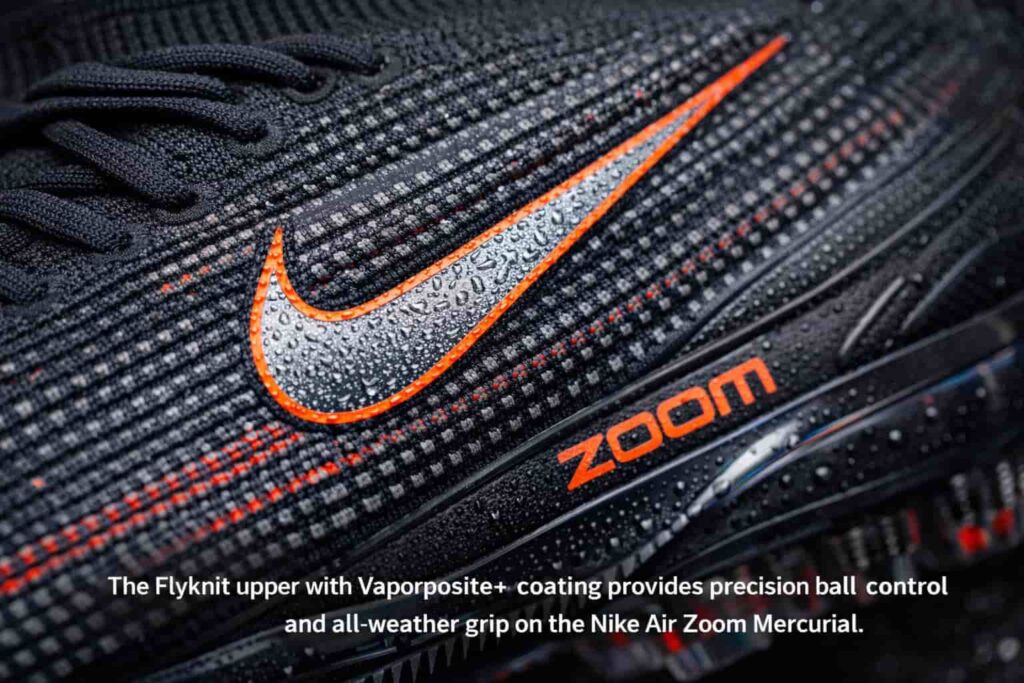
Over the Flyknit base, Nike applies a proprietary coating called Vaporposite+. This thin, textured layer serves two purposes: it adds a micro-texture that improves friction between the boot surface and the ball (especially in wet conditions), and it provides a thin shell of protection and structure that prevents the Flyknit from stretching too much under the stress of competitive play.
The Vaporposite+ coating is particularly effective in wet weather. Traditional smooth synthetic uppers can become slippery when wet, reducing ball control. The micro-texture of Vaporposite+ maintains consistent grip regardless of conditions — a significant advantage for players competing in leagues with frequent rain (such as the Premier League or Bundesliga).
Dynamic Fit Collar
The Dynamic Fit collar is the sock-like ankle extension that distinguishes the Mercurial Superfly from the lower-cut Mercurial Vapor. The collar wraps around the ankle to create a seamless connection between foot and boot, improving the sensation of control and providing mild ankle support without restricting range of motion.
The 2025 version of the Dynamic Fit collar uses a thinner, more flexible material than earlier generations, addressing a common complaint that the collar was too rigid or difficult to get on and off. Nike has also adjusted the collar height, lowering it slightly to reduce the chance of irritation during extended wear.
On-Pitch Performance Review: Speed, Traction, and Control
Sprint Speed and Acceleration
The Air Zoom Mercurial excels where it matters most for its target audience: straight-line speed and explosive acceleration from a standing start. The combination of the lightweight upper (the entire boot weighs approximately 190 grams in a size US 9), the responsive Air Zoom soleplate, and the aggressive stud configuration creates a boot that feels like it amplifies your effort rather than just accommodating it.
During testing, the first three to five steps from a dead stop feel distinctly faster than in traditional speed boots. The Air Zoom unit provides a subtle but perceptible push-off that reduces the muscular effort required to reach top speed. Over the course of a full match, this small efficiency gain can add up, particularly for wide attackers and strikers who make repeated sprint efforts.
Traction and Stud Configuration
The soleplate features a triangular stud arrangement in the forefoot and chevron-shaped studs in the heel. This configuration is optimized for forward propulsion and sharp directional changes — the two movements that define a speed player’s role on the pitch.
On firm natural grass (the FG version), the studs provide excellent grip without the feeling of being “stuck” in the ground that can occur with longer conical studs. On firm artificial turf, there is a dedicated AG (Artificial Ground) version with shorter, more numerous studs designed to distribute pressure more evenly and prevent the excessive stud pressure that can cause foot discomfort on hard synthetic surfaces.
Ball Control and Touch
Historically, speed boots have sacrificed ball control for weight reduction. The Air Zoom Mercurial challenges this trade-off. The Flyknit upper with Vaporposite+ provides a level of touch and ball intimacy that approaches — though does not quite equal — control-focused boots like the Nike Phantom GX or Adidas Predator.
First touch receiving, short passing, and close-control dribbling all feel confident and natural. The boot does not interfere with the ball; it gets out of the way and lets your technique do the talking. Where it falls slightly short compared to dedicated control boots is in the deadened touch that some midfielders prefer for cushioning long, driven passes — the Mercurial’s responsiveness means the ball pings off the surface a bit more quickly than with a softer, thicker upper.
The Best Nike Air Zoom Mercurial Colorways in 2025
Pink Blast / Blue Chill (Featured Colorway)
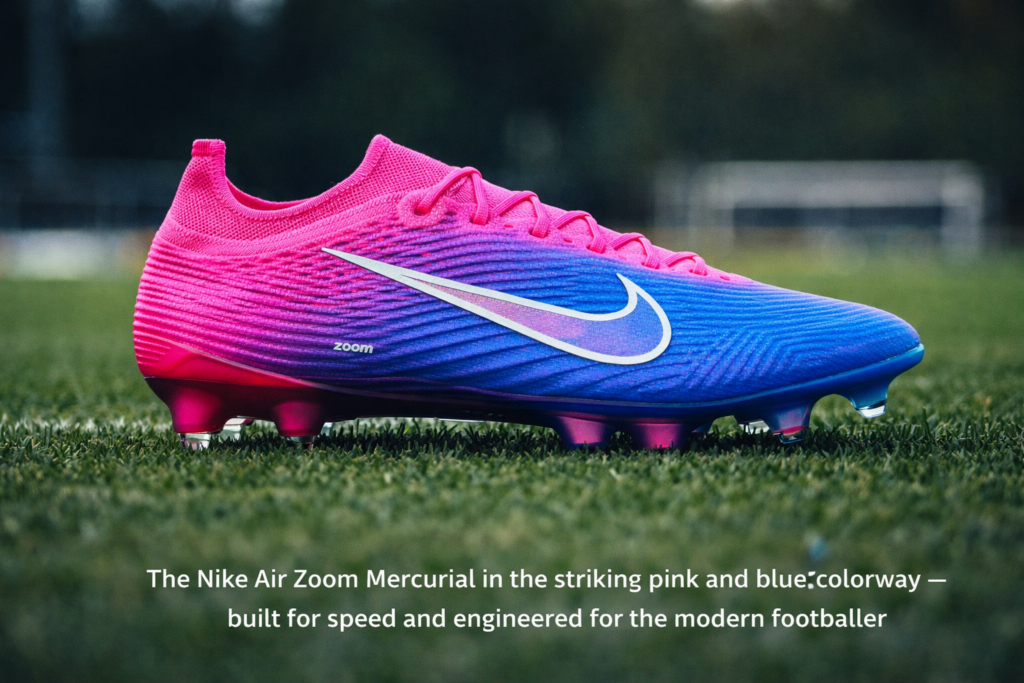
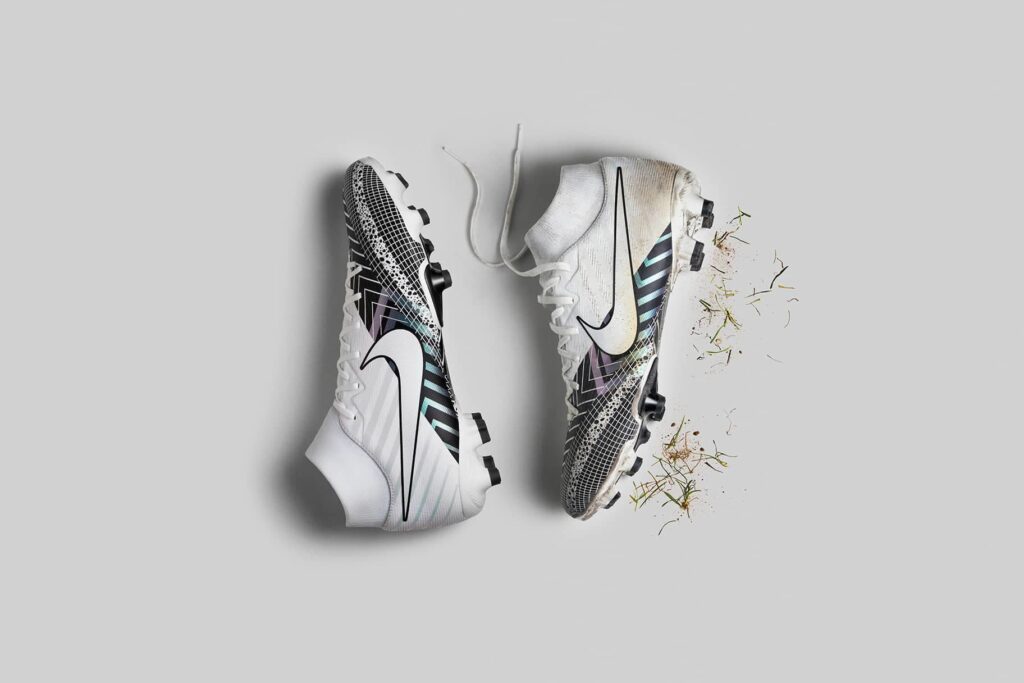
The pink and blue gradient colorway that has gone viral on social media is arguably the most visually striking football boot of 2025. The upper transitions from hot pink at the toe to electric blue at the heel, with an iridescent soleplate that shifts between purple, blue, and pink depending on the light angle. It is bold, unapologetic, and instantly recognizable from any seat in the stadium.
Blackout (Elite Stealth)
For players who prefer a more understated look, the all-black “Blackout” version offers the same technology in a clean, professional aesthetic. The black upper is paired with a tonal dark gray soleplate and minimal branding. This colorway is popular among professionals who want the boot’s performance benefits without the visual attention.
Volt / Black (High Visibility)
The electric yellow “Volt” colorway has been a Mercurial staple for over a decade. The 2025 version features a neon yellow upper with black accents and a contrasting white soleplate. It is the classic Mercurial look — aggressive, fast, and impossible to miss.
White / University Red (Heritage)
The white and red colorway pays homage to early Mercurial designs and pairs well with a wide range of team kits. The clean white base with red Swoosh and stud tips gives it a slightly retro aesthetic that appeals to fans of the Mercurial’s heritage.
Nike Mercurial vs Adidas X vs Puma Ultra: Speed Boot Showdown
| Feature | Nike Air Zoom Mercurial | Adidas X Crazyfast | Puma Ultra Ultimate |
|---|---|---|---|
| Weight (US 9) | ~190g | ~185g | ~175g |
| Upper Material | Flyknit + Vaporposite+ | Aeropacity Speedskin | ULTRAWEAVE |
| Cushioning | Air Zoom unit (forefoot) | Lightstrike Pro | Puma NITRO Elite foam |
| Collar | Dynamic Fit (mid-cut) | Speedframe collar (low) | PWRTAPE band (low) |
| Soleplate | Carbon fiber + Air Zoom | Aeroframe FG | SPEEDUNIT soleplate |
| Ball Control | Very Good | Good | Good |
| Retail Price (2025) | $275 (Elite FG) | $260 (Elite FG) | $230 (Elite FG) |
| Best For | Explosive acceleration + control | Lightweight speed purists | Ultra-light budget speed option |
Pro Players Who Wear the Nike Mercurial
Kylian Mbappe
The most prominent Mercurial wearer in world football is Kylian Mbappe. His explosive pace, electrifying acceleration, and ability to beat defenders with raw speed make him the perfect ambassador for a boot built around velocity. Mbappe has worn various iterations of the Mercurial throughout his career and is closely involved in providing performance feedback to Nike’s design team.
Cristiano Ronaldo’s Mercurial Legacy
Although Cristiano Ronaldo now wears his own signature Nike CR7 line (still based on the Mercurial platform), his decades-long partnership with the Mercurial series helped define the modern speed boot category. Ronaldo’s transition from a flashy winger at Manchester United to a complete striker at Real Madrid was mirrored by the Mercurial’s own evolution from a pure speed boot to a more balanced, versatile platform.
Other Notable Mercurial Players
- Vinicius Jr. — Real Madrid winger known for explosive dribbling and pace
- Rafael Leao — AC Milan forward whose acceleration and running style suit the Mercurial’s profile
- Jadon Sancho — Technical winger who combines speed with close control
- Sam Kerr — Australian striker and prominent figure in women’s football who has worn Mercurial boots throughout her career
Sizing and Fit Guide for the Air Zoom Mercurial
General Sizing Recommendation
The Nike Air Zoom Mercurial fits true to size (TTS) for most foot shapes. The Flyknit upper has enough natural stretch to accommodate slight variations in foot width without needing to size up. If you have particularly wide feet, you may want to go up half a size, although this can compromise the locked-in feel that makes the boot effective at high speeds.
Break-In Period
Unlike leather boots that require significant break-in time, the Flyknit upper on the Air Zoom Mercurial is comfortable almost immediately out of the box. Most players report that the boot feels match-ready after one or two light training sessions. The Dynamic Fit collar may feel snug initially but loosens slightly with wear without losing its supportive qualities.
Width Considerations
The Mercurial is designed for narrow-to-medium foot widths. Players with genuinely wide feet may find the forefoot too constrictive and should consider alternatives like the Adidas Predator or Nike Phantom GX, which offer a roomier fit in the toe box. Trying boots on in-store with your match socks is always the best approach to determining fit.
How to Care for and Maintain Your Nike Mercurial Boots
After Every Match or Training Session
- Remove excess dirt and mud with a soft brush or damp cloth immediately after play
- Stuff the boots with newspaper or boot trees to absorb moisture and help them maintain their shape
- Allow them to air dry at room temperature — never place them in direct sunlight, on a radiator, or in a dryer, as heat damages the glue, warps the soleplate, and degrades the Flyknit material
Deep Cleaning
For a thorough clean, use lukewarm water with a small amount of mild soap (dish soap works well). Gently scrub the upper with a soft-bristle brush, paying attention to the textured Vaporposite+ areas where dirt can accumulate. Rinse with clean water and air dry. Do not machine wash or submerge the boots completely, as this can damage the Air Zoom unit and compromise the boot’s structural integrity.
Extending Boot Lifespan
- Use them only on the surface they are designed for (FG boots on natural grass, AG boots on artificial turf)
- Rotate between two pairs if you train frequently to allow each pair adequate drying time between sessions
- Store them in a ventilated boot bag rather than a sealed plastic bag, which traps moisture and promotes bacterial growth
- Replace studs (on models with removable studs) when they show significant wear
Where to Buy Authentic Nike Air Zoom Mercurial Boots
Official Channels
The safest way to purchase authentic Nike Air Zoom Mercurial boots is through official Nike channels: Nike.com, the Nike App, and Nike retail stores. These channels guarantee authenticity, provide the full manufacturer’s warranty, and typically offer free returns within 30 to 60 days.
Authorized Retailers
Major sporting goods retailers like Dick’s Sporting Goods, JD Sports, Pro:Direct Soccer, Unisport, and Soccer.com are authorized Nike dealers. These retailers carry genuine products and often offer a wider selection of sizes and colorways than Nike’s own direct-to-consumer channels.
Secondary Market Caution
If purchasing from secondary markets like eBay, Mercari, or local marketplace apps, exercise caution. Counterfeit football boots are common, and high-end models like the Air Zoom Mercurial are frequently copied. Look for sellers with high ratings and verified sales histories, and consider using authentication services if the price seems unusually low.
Frequently Asked Questions (FAQ)
What makes the Nike Air Zoom Mercurial different from the regular Nike Mercurial Vapor?
The primary difference is the Air Zoom cushioning unit integrated into the soleplate of the Air Zoom Mercurial. The standard Mercurial Vapor uses a traditional TPU soleplate without dedicated cushioning technology. The Air Zoom version provides energy return and impact absorption that the standard Vapor does not. The Air Zoom model is also the premium “Elite” tier, using higher-quality materials throughout compared to the more affordable Vapor models.
Are Nike Air Zoom Mercurial boots good for wide feet?
The Mercurial is designed for narrow-to-medium foot widths and may feel too tight for players with wide feet. If you have wide feet, consider trying the boot on in-store with your match socks before purchasing. Going up half a size can help, but may reduce the locked-in fit that makes the boot effective. For genuinely wide feet, the Nike Phantom GX or Adidas Predator may be better alternatives.
How long do Nike Mercurial boots typically last?
With proper care and maintenance, a pair of Nike Air Zoom Mercurial boots used for regular training and matches should last approximately 6 to 12 months depending on playing surface, frequency of use, and how well they are maintained. Using the correct boot version for your playing surface (FG for natural grass, AG for artificial turf) significantly extends boot life.
Can I wear Nike Air Zoom Mercurial boots on artificial turf?
You should only wear the AG (Artificial Ground) version on artificial turf. Using FG (Firm Ground) studs on artificial turf creates excessive pressure points on the foot, increases the risk of knee and ankle injuries, and dramatically accelerates stud wear. Nike offers the Air Zoom Mercurial in both FG and AG configurations specifically to address the different demands of each surface type.
What is the price of the Nike Air Zoom Mercurial Elite in 2025?
The Nike Air Zoom Mercurial Elite FG retails at approximately $275 USD in 2025. The AG version is priced identically. Lower-tier versions of the Mercurial (Pro, Academy, Club) are available at reduced prices ranging from $80 to $160, though they do not include the Air Zoom technology or premium Flyknit upper.
Is the Dynamic Fit collar necessary, or should I get the low-cut Mercurial Vapor?
The Dynamic Fit collar on the Superfly version provides a more connected feel and mild ankle support, but it is a matter of personal preference rather than performance necessity. Many professional players prefer the low-cut Mercurial Vapor for its lighter weight and easier on-off. If you have never worn a collared boot before, try both versions on in-store to determine which feels more natural.
🎯 How to enter the challenge:
- Sign Up: Drop your name and email in the widget below.
- Beat the Quiz: Answer 5 questions. The higher your score, the better your prize tier (ranging from Starter all the way to Legendary).
- Crucial Final Step (TikTok): You’ll get a unique code once you finish. You must click the button, head over to our TikTok, and drop your code in the comments. If you skip this, your entry won’t count!
👇 Scroll down and start the challenge right now. Good luck!
Play. Answer.
Win Big.
Score high on 5 riddles to unlock your prize tier — from gift cards to iPhones. Every correct answer levels you up.
No purchase necessary · Must be 18+ · One entry per person
Register to Play
Two fields. That’s all we need to get you started.
🔒 Your data is encrypted and never shared.
Evaluating your performance…
Verify on TikTok
Comment your unique verification code on our TikTok post to confirm your entry. Without it, your prize cannot be processed.
⚠️ Your entry status: PENDING VERIFICATION
We review comments daily. Winners are contacted via email within 48 hours.
Already Entered
You’ve already played. Only one entry per person is allowed. Check your email for updates on your prize status.